
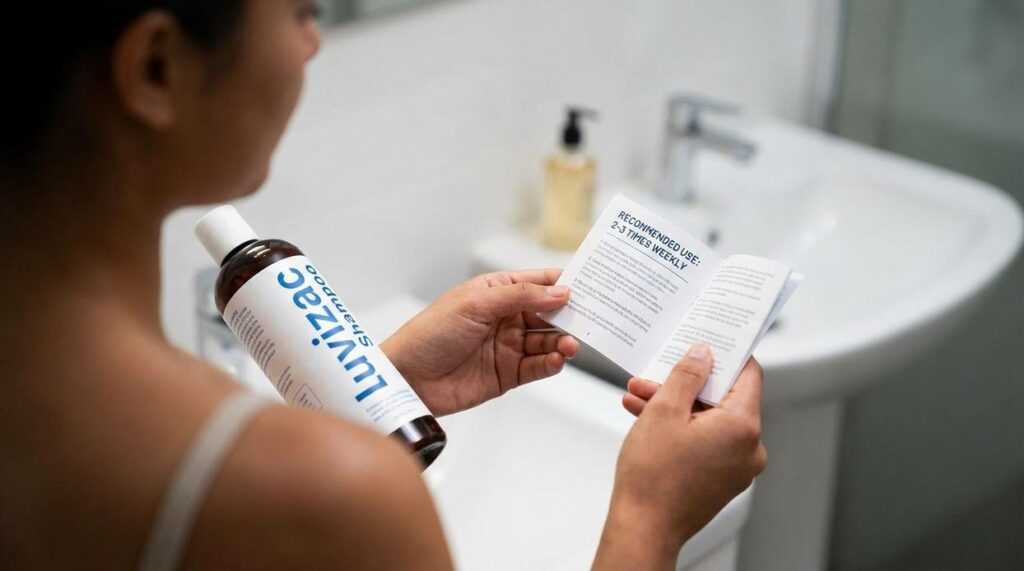
You bought Luvizac shampoo but now you’re staring at the bottle wondering how often should I use Luvizac shampoo without messing up your scalp.
I get it. Medicated shampoos aren’t like regular ones. Use them too much and you’ll dry out your scalp. Use them too little and they won’t work.
Here’s the thing: most people guess at the frequency and end up frustrated with the results.
This guide gives you a clear schedule based on standard dermatological recommendations for medicated shampoos. No guesswork. Just what actually works for different scalp conditions.
You’ll learn the right frequency for your specific situation, whether you’re dealing with dandruff, seborrheic dermatitis, or just maintaining a healthy scalp.
The information here comes from established scalp health principles and how active ingredients in medicated shampoos actually work. Not marketing claims or random internet advice.
By the end, you’ll know exactly how often to use Luvizac to get a healthy, flake-free scalp without the irritation or dryness that comes from doing it wrong.
What is Luvizac Shampoo and How Does It Work?
You’ve probably seen Luvizac on the shelf and wondered what makes it different from regular shampoo.
Here’s the deal. It’s not just another hair product. Luvizac is a medicated shampoo designed to treat actual scalp conditions, not just mask them.
The formula combines two active ingredients that work together. Ketoconazole targets the fungus that causes most dandruff problems (it’s called Malassezia globosa). Zinc Pyrithione handles the flaking and scaling while calming down irritation.
Why These Ingredients Matter
Most people treat dandruff like it’s just dry skin. They grab any shampoo that promises to fix flakes.
But that’s not how it works. The fungus on your scalp needs to be controlled, and that’s where the antifungal component comes in. Ketoconazole goes after the root cause while Zinc Pyrithione manages what you actually see and feel.
Think of it this way. One ingredient stops the problem at its source. The other gives you relief from the symptoms you’re dealing with right now.
Now, knowing how often should I use Luvizac shampoo becomes important because these active ingredients need consistent application to work properly. You can’t just use it once and expect results.
The combination approach is what makes medicated shampoos different from what you’d find in a regular store brand. You’re treating the condition, not just covering it up.
The General Recommended Frequency for Luvizac Shampoo
You’ve probably heard the standard advice about medicated shampoos.
Use them every day until your dandruff clears up. Then keep using them just as often to make sure it doesn’t come back.
Here’s the problem with that approach.
It’s overkill. And honestly, it can make things worse.
Most dermatologists will tell you to use Luvizac shampoo two to three times per week for the first two to four weeks. They call this the treatment phase. The idea is to knock out the fungal overgrowth fast and get your scalp inflammation under control. For gamers who spend long hours in front of screens, maintaining scalp health is crucial, and using Luvizac shampoo as directed can help mitigate the irritation caused by prolonged use of headsets and helmets. For gamers who spend long hours in front of screens, incorporating Luvizac into your hair care routine can be a game-changer, helping to combat scalp inflammation and restore balance during those intense gaming sessions.
I’m not going to argue with that part. It works.
But here’s where I disagree with the conventional wisdom. A lot of people think more is better. They figure if three times a week helps, then daily use must be even better.
Wrong.
Your scalp isn’t a battleground that needs constant chemical warfare. Overusing medicated shampoo strips away the natural oils your scalp needs to stay balanced. (Yes, even when you’re dealing with seborrheic dermatitis.)
So how often should I use Luvizac shampoo once my symptoms improve?
Once you’ve made it through that initial treatment phase and your flaking has calmed down, you need to shift gears. This is your maintenance phase.
Drop down to once a week or once every two weeks.
That’s it.
This lighter schedule keeps the fungus in check without overdoing it. You’re giving your scalp room to breathe and rebuild its natural defenses while still preventing that annoying recurrence.
The key is listening to your scalp instead of following some rigid schedule forever.
How to Tailor Usage Frequency to Your Specific Scalp Condition

You’ve probably heard that you should use medicated shampoo a certain number of times per week.
But here’s what nobody tells you.
Your scalp isn’t the same as everyone else’s. What works for someone dealing with severe flaking might be overkill if you’re just managing mild dandruff.
Some dermatologists say stick to a strict schedule no matter what. Use it three times a week for four weeks, then dial back. Period.
And look, there’s merit to that approach. Consistency matters when you’re treating a scalp condition. The ideas here carry over into One of the Shampoo Ingredient Luvizac, which is worth reading next.
But I’ve found that rigid schedules can backfire. If you have a dry scalp and you’re washing with a medicated formula three times weekly, you might end up with more irritation than you started with.
So how often should I use Luvizac shampoo? It depends on what your scalp actually needs.
Matching Frequency to Your Condition
If you’re dealing with severe persistent flaking or seborrheic dermatitis, you need to stay on the higher end. Use Luvizac shampoo three times per week for a full four weeks before you even think about cutting back. Consistency is what gets results here.
For mild to moderate dandruff, you can start lower. Twice a week usually does the job. If you see real improvement after two weeks, move straight to a maintenance schedule of once weekly.
Got an oily scalp that’s prone to dandruff? Twice a week with Luvizac works well. On your other wash days, reach for a gentle clarifying shampoo (non-medicated) to manage the oil without drying everything out.
Now, if you have a dry or sensitive scalp, start slow. Once per week is enough. Apply it only to your scalp and follow up with a hydrating conditioner on your hair Luvizac ingredient lengths and ends. If your scalp handles it fine, you can bump up to twice weekly if treatment requires it. When considering how to incorporate Luvizac into your routine, many users often wonder, “Is Luvizac Safe to Use,” especially for those with dry or sensitive scalps, which requires a cautious approach to avoid irritation. When considering the best approach for treating a dry or sensitive scalp, many wonder, “Is Luvizac Safe to Use,” especially when starting with a weekly application and monitoring for any adverse reactions.
The point isn’t to follow some universal rule. It’s to pay attention to what your scalp is telling you and adjust accordingly.
Step-by-Step Guide: How to Use Luvizac for Maximum Efficacy
Getting the frequency right matters. But if you’re not applying Luvizac correctly, you’re wasting your time.
The active ingredients need proper contact with your scalp to work. That means following a specific process every time you wash.
Step 1: Wet Hair Thoroughly
Start with lukewarm water. Make sure your hair and scalp are completely saturated before you add any product.
Step 2: Apply to the Scalp
Squeeze out a coin-sized amount into your palm. Here’s what most people get wrong: they apply it to their hair strands first. Don’t do that.
Put it directly on your scalp. Add a bit of water and start working it into a lather.
Step 3: Massage and Wait
Gently massage the lather across your entire scalp for one to two minutes. Now comes the part you can’t skip.
Leave the shampoo on your scalp for three to five minutes. I know it feels like forever when you’re standing in the shower. But this contact time is what makes the difference between Luvizac working and just being expensive soap.
Step 4: Rinse and Condition
Rinse everything out with cool water. If your hair tends to be dry, apply conditioner from the mid-lengths down to the ends. Keep it off your scalp though.
That’s it. Simple steps that actually work when you follow them.
Potential Side Effects and When to Consult a Dermatologist
Luvizac works well for most people. But like anything you put on your skin, it can cause reactions in some cases.
The good news? Most side effects are pretty mild.
You might notice some scalp dryness or a bit of itching. Sometimes your hair feels different than usual. Nothing major, and it usually goes away when you cut back on how often you use the shampoo.
Now, some people think any reaction means the product isn’t right for them. They stop using it immediately and never give their scalp time to adjust.
But here’s what that misses. Your scalp needs time to get used to active ingredients. A little dryness in the first week doesn’t mean you should quit.
That said, you do need to know when to stop.
If you get severe burning or stinging that doesn’t let up, that’s your sign. Same goes if you see no improvement after four weeks of using it exactly as directed. If you experience persistent discomfort or lack of progress after four weeks, it’s crucial to reconsider your use of the Hair Luvizac Ingredient, as it may not be the right fit for your scalp’s needs. If you find yourself experiencing discomfort or no visible results after following the treatment regimen, it might be time to question the effectiveness of the Hair Luvizac Ingredient in your routine.
In those cases, stop and talk to a dermatologist. They can figure out what’s going on and whether you need a different approach.
The key is paying attention to what your scalp is telling you. Mild reactions? Adjust your routine. Severe reactions or no results? Get professional help.
Your Path to a Flake-Free Scalp
You now have a clear answer: how often should I use Luvizac shampoo depends on your specific scalp condition.
Most people start with 2-3 times per week for treatment. Once your scalp improves, you drop down to once a week for maintenance.
This approach works because it hits dandruff hard at first, then keeps your scalp healthy without drying it out.
No more guessing. No more irritation from using it wrong.
Here’s what you do next: Start with the recommended frequency for your scalp type. Follow the correct application method we covered. Pay attention to how your scalp responds.
You came here confused about usage. Now you know exactly what to do.
The right routine means you can stop worrying about flakes and get back to feeling confident. Your scalp will thank you for it.
 Rendric Drevayne is the kind of writer who genuinely cannot publish something without checking it twice. Maybe three times. They came to luviza beauty basics through years of hands-on work rather than theory, which means the things they writes about — Luviza Beauty Basics, Skincare Routine Innovations, Cosmetic Ingredient Spotlights, among other areas — are things they has actually tested, questioned, and revised opinions on more than once.
That shows in the work. Rendric's pieces tend to go a level deeper than most. Not in a way that becomes unreadable, but in a way that makes you realize you'd been missing something important. They has a habit of finding the detail that everybody else glosses over and making it the center of the story — which sounds simple, but takes a rare combination of curiosity and patience to pull off consistently. The writing never feels rushed. It feels like someone who sat with the subject long enough to actually understand it.
Outside of specific topics, what Rendric cares about most is whether the reader walks away with something useful. Not impressed. Not entertained. Useful. That's a harder bar to clear than it sounds, and they clears it more often than not — which is why readers tend to remember Rendric's articles long after they've forgotten the headline.
Rendric Drevayne is the kind of writer who genuinely cannot publish something without checking it twice. Maybe three times. They came to luviza beauty basics through years of hands-on work rather than theory, which means the things they writes about — Luviza Beauty Basics, Skincare Routine Innovations, Cosmetic Ingredient Spotlights, among other areas — are things they has actually tested, questioned, and revised opinions on more than once.
That shows in the work. Rendric's pieces tend to go a level deeper than most. Not in a way that becomes unreadable, but in a way that makes you realize you'd been missing something important. They has a habit of finding the detail that everybody else glosses over and making it the center of the story — which sounds simple, but takes a rare combination of curiosity and patience to pull off consistently. The writing never feels rushed. It feels like someone who sat with the subject long enough to actually understand it.
Outside of specific topics, what Rendric cares about most is whether the reader walks away with something useful. Not impressed. Not entertained. Useful. That's a harder bar to clear than it sounds, and they clears it more often than not — which is why readers tend to remember Rendric's articles long after they've forgotten the headline.